

Actuaries are warning policymakers, pension schemes and financial institutions that global temperatures rises are accelerating — and could cause “catastrophic” economic disruption far sooner than previously modelled.
These stark warnings were contained in new research from the Institute and Faculty of Actuaries (IFoA) and the University of Exeter.
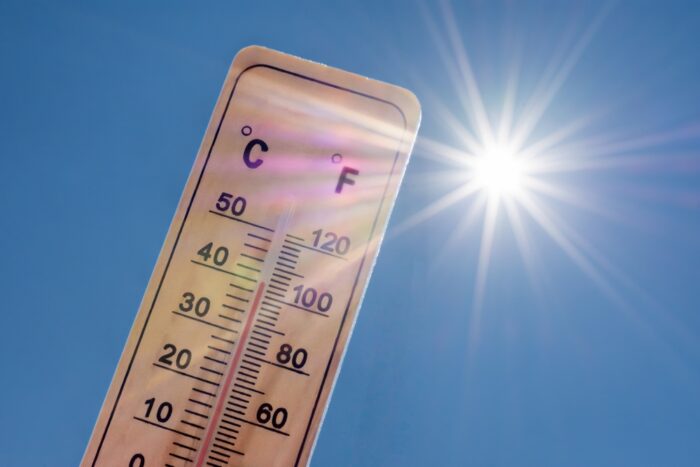
This Parasol Lost report warns that global temperatures are now rising faster than predicted, increasing the likelihood that warming will exceed 2°C before 2050 — a threshold associated with severe economic and societal disruption.
Critically, the report challenges long-standing economic models used to assess the financial impact of climate change. Previous estimates suggested that a 3°C temperature rise might shrink global GDP by about 2.1 per cent, with a 6°C increase potentially contracting global GDP by 7.9 per cent.
But the report says the methodology of these assessments excluded many material risks, such as sea-level rise, tipping points, biodiversity loss, human health impacts and conflict-driven migration.
It points to recent analysis from the UK’s Climate Financial Risk Forum, which suggests firms could consider as “plausible” a 15 to 20 per cent contraction in global GDP in a severe climate and nature shock scenario.
The report says the accelerated these higher temperate rises, raise the risk of climate-driven inflation, financial shocks, and the withdrawal of insurance from high‑risk areas much sooner than expected, increasing the chance of widespread financial instability. It says this could lead to ‘Planetary Insolvency’ – societal and economic collapse from the loss of nature’s critical support systems.
The report draws parallels with the Global Financial Crisis, underscoring the fact that risk models then could not see the accumulation of system-level risks, leading to risk underestimation, misplaced confidence, and the systemic collapse of 2008.
The report sets some of the reasons behind these increased temperature rises. It highlights the rapid decline of “aerosol cooling” — a hidden sunshade effect created by air pollution — which has historically offset around 0.5°C of warming. As air pollution falls, particularly due to tighter shipping regulations, this cooling effect is being lost, accelerating temperature rises. Recent evidence also suggests the Earth’s sensitivity to greenhouse gases may be at the higher end of scientific estimates.
Sandy Trust, lead author and Sustainability Board Member, Institute and Faculty of Actuaries, says “Planetary Solvency is threatened, and we urgently need a recovery plan. An actuarial review of key climate change assumptions shows we may have seriously underestimated the rate of warming as well as the related economic impacts.
“Unless we rapidly change course, climate damages will start to impact growth and future prosperity. The parallels between the risk management failure of the Global Financial Crisis and inaction on the major systemic risk posed by climate change are clear. Both feature an over reliance on benign risk model results and a failure to understand systemic risk.”
Paul Sweeting, president of the Institute and Faculty of Actuaries adds: “Actuaries specialise in understanding and managing risk, and the cooperative spirit of our profession drives us to serve society as a whole. The stark findings of this report highlight the urgent need to continue working in partnership with policyholders, governments, scientists, and other key stakeholders, to help address the root causes of the climate crisis and safeguard the wellbeing of all communities.”
Dr Jess Abrams report author and senior impact fellow at Green Futures Solutions, University of Exeter, adds: “We are entering a new reality of a 1.5° world, where intense physical risks are now threatening economies, living costs, and financial systems, and catastrophic tipping points are on the horizon.
“Today, we can already observe the economic cost of these climate impacts; in the US alone, billion-dollar climate disasters now take place every 19 days, compared to every 82 days in the 1980s. As the rate of warming accelerates, these climate shocks are now likely to arrive faster, bringing more immediate and intense impacts to our economies that policymakers and markets must be prepared for.”
Commenting on the report Tony Burdon, a sustainable finance expert and pervious CEO of Make My Money Matter says: “For many – this will not be surprising news. But for me the thing is to dig deeper into what this warming implies. The joint report – the fourth in a series from the IFoA and UofE – draws attention to a legacy of economic modelling that has downplayed the impact of climate change on economies, leading to complacency and delays in policy change.
“All this raises the risk of climate-driven inflation, financial shocks, pension value shocks, food shocks and the withdrawal of insurance from high-risk areas sooner than many expect.But crucially, we still have agency.”
He called for action to integrate planetary solvency risk assessments into policy and financial decision-making, alongside measure to cut emissions, halt deforestation and supercharge the energy transition.