

Rising sickness absence and ongoing pressure on the NHS has made health and wellbeing a key concern for employers, insurers and advisers. Difficulties accessing many services – from dentistry to mental health support – shows that the current approach is not working for many employers, or their employees.
TO DOWNLOAD A PDF OF THIS ROUND TABLE SUPPLEMENT CLICK HERE
The question is how workplace health benefits can fill these gaps, potentially providing a more organised, scalable and cost-effective way to improve the health of employees and so lower absence rates and improve productivity in the workplace.
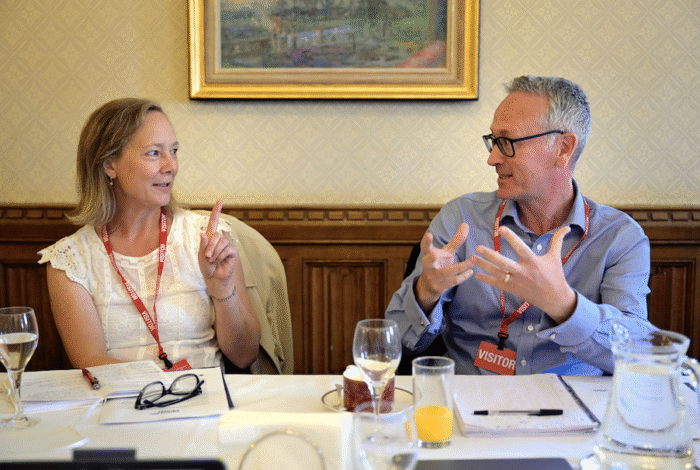
At a recent roundtable hosted by Corporate Adviser and sponsored by Unum and Simply Health, industry leaders explored how such reform might work and the potential challenges it would face. One option under discussion was a move towards an auto-enrolment-style system for health benefits, with employers effectively compelled to offer some basic form of cover. However while many attending the event thought this would be desirable most agreed there was not the political will to push through such changes at present.
The discussion highlighted the need for stronger collaboration among providers, clearer communication of benefits, particularly with smaller employers, and better use of digital and social media, to boost engagement.
System strain
Workplace sickness absence has reached record levels in the UK, with younger workers driving the rise. Data shows that employees aged 18 to 34 are now taking twice as many sick days as colleagues aged 55 and above — a shift that reflects broader changes in attitudes to health, work and the employer’s role in supporting wellbeing.
Simplyhealth product director Tina Kennedy said: “There’s an expectation now in the younger demographics that they know they’re going to have to pay for their health care. The workplace is where people can be reached but the system isn’t yet fit to scale.”
Employers are already grappling with costs with long-term sickness absence now exceeding £20,000 per affected employee. Workplace health has therefore shifted from a ‘nice-to-have’ to a business-critical issue. But most businesses, particularly SMEs, lack the tools, frameworks or confidence to deliver effective support.
AE framework
Against this backdrop, delegates discussed the potential of an auto-enrolment-style (AE) framework for workplace health benefits. The comparison with pensions AE surfaced early and gained traction.
PwC director, DC pensions & benefits lead Roshni Patel said: “Employers are trusted but they need a framework. SMEs especially need clarity. They don’t have HR departments or brokers pushing solutions. A national baseline would be transformational.”
Although no one expected such a system in the near future, there was a strong appetite to begin the conversation about the potential benefits this could deliver.
Becketts senior employee services consultant Martin Moore added: “It took 20 years for pensions AE to happen from when it was first seriously discussed. That doesn’t mean we shouldn’t start the conversation now. If we wait, we risk being left behind.”
Those at the event pointed out that insurance-based healthcare benefits, offered through the workplace wouldn’t replace the NHS, delegates but offer complementary support, mirroring the way pensions AE bolstered, rather than replaced, the state pension.
Omny Benefits strategic partnerships consultant Roy McLoughlin said: “The state pension didn’t go away when AE came in. It was about recognising the state couldn’t do everything, so we created a structure to help people contribute more themselves. We could do the same with health.”
Starting small
There was consensus that any AE-style rollout should begin with something simple, scalable and valuable, such as a universal mental health benefit.
Moore said: “Mental health support services are a good starting point. Technically, they’re not included in the core benefits package. The waiting lists are ridiculous, and you often have to be in serious distress to qualify.”
According to data from the Chartered Institute of Payroll Professionals, 94 per cent of work absences are due to minor illnesses, 45 per cent due to musculoskeletal injuries and 39 per cent of people report mental health issues.
Moore added: “By my rough estimate, about half of sickness-related costs are linked to stress alone. For employers, the return on investment is clear, less absenteeism due to stress-related illness. The government could incentivise this with automatic enrolment. Start with making mental health support compulsory for employers, a cost-effective step, and roll out wider support measures gradually.”
Succession Employee Benefits director Simon O’Reilly added: “People are waiting 18 months for an ADHD or autism diagnosis. Employers are already dealing with the consequences. If we can help fund quicker assessments or triage services, that’s a win for everyone.”
Patel agreed, highlighting that access issues in neurodiverse and mental health services are driving interest from both employers and employees. She said: “There’s a real crisis in access. We need to look at models that ease pressure on the NHS but also meet expectations around timely support.
“EAP means nothing to most people. But say ‘mental health support’ or ‘someone to talk to’ and they get it straight away. We have to stop using internal jargon and speak in ways people understand.”
Rather than full private medical insurance, participants advocated for basic, light-touch offerings that could be rolled out universally. Kennedy said: “We don’t need to start with PMI. Even one annual check-in, a remote GP, or access to early mental health triage, those things can shift engagement massively and are achievable at scale.”
Framing and feasibility
But challenges remain with some delegates raising the political and practical risks of such a system being perceived as undermining the NHS.
Kennedy also said: “There’s a danger this gets framed as anti-NHS. But it’s not about replacing the NHS, it’s about recognising its limits. Workplace health AE would support the NHS, not undermine it.”
She noted that in many areas, the NHS is already retreating. “Dentistry is the big one, but look at glaucoma screening too. These are technically NHS services but practically inaccessible for many. If employers can step in, with government support, that relieves pressure.”
Others highlighted operational barriers, particularly the shortage of therapists and healthcare professionals. Brown & Brown head of group risk Terry Fromant said: “Everyone wants to offer therapy, but there’s a shortage of therapists. If we’re going to scale mental health support, we need to think about triage, prioritisation and shared infrastructure.”
Building on what exists
With structural reform likely years away, delegates also explored more immediate opportunities, starting with better use and promotion of early intervention services already embedded in group risk products.
Moore noted: “Whoever invented early intervention in the first place, that was genius. We’ve had cases where just one physio session stopped a serious issue becoming a full-blown claim. But bizarrely, that’s still logged as a declined claim.”
Patel agreed, saying we need products that make early intervention possible. She said: “We need to offer different types of products that allow for early intervention. Cash plans, for example, give people access to care before something becomes a bigger issue. That’s what’s going to keep people working and prevent escalation.”
Shifting the focus to communication and engagement, McLoughlin said storytelling remains critical — and called for the industry to do more to raise the profile of many group risk products and wellbeing benefits. “We need to tell the story better: case studies, outcomes, real people. This isn’t about ticking boxes, it’s about showing employers and employees what these services actually do.”
A key part of this was improving engagement, especially with younger employees. Kennedy added: “More than 60 per cent of Gen Z trust health influencers on TikTok more than their GP. It sounds alarming, but that’s the reality. If someone’s hearing about ADHD or sleep therapy on TikTok, we need to be ready to meet them where they are.”
Patel noted how social media is where people are now getting their health advice. She said: “People are promoting products directly to consumers, and they’re buying them. And often, the people selling don’t have any expertise, but they’re creating that trust and emotional connection. That’s a huge challenge for us, especially if we’re trying to promote responsible, evidence-based health products.”
Moore highlighted that while influencers are building trust through relatability, traditional providers are often seen as “faceless”, making it harder to engage consumers.
He said: “A big issue is that people don’t trust the big providers. They’re seen as faceless, corporate, unrelatable. That’s a problem if we want engagement. People want to know who they’re dealing with, that someone’s actually on their side. If the perception is that insurers only engage when it benefits them, then we’re losing the trust battle.”
Collaboration and next steps
There was also appetite for greater collaboration across providers, particularly in how third-party services are delivered and measured. Broadstone principal Robin Watkins noted: “The industry is using platforms but often works in silos. There’s an opportunity to learn together, maybe even standardise what ‘good’ looks like.”
Unum key account director Garreth Todd said more cooperation was technically feasible. “Unum and Aviva both use Square Health. We know it’s possible to share, but that next step of aligning metrics and outcomes will take time. It’s not imminent, but it’s worth aiming for.”
While AE-style reform remains a long-term ambition for experts, they remain cautiously optimistic, agreeing that there is work that can be done now, through communication, collaboration and smarter use of what already exists.
McLoughlin added: “This feels like pensions did two decades ago. The cracks are visible. The solution isn’t fully formed. But we have the tools, the platforms, and a growing social mandate. Now it’s about working together, with government and with each other, to build something sustainable.”
Whether through a national framework, better storytelling or smarter integration with the NHS, delegates agreed that workplace health and protection can no longer be optional or reactive. They say it must become structured, inclusive, and built for scale to meet the needs of a changing workforce.