Wellbeing services have become a standard feature across the group risk and healthcare market in recent years — with many focused on improving member health to reduce both the number and severity of claims.
TO DOWNLOAD A FULL COPY OF THE ROUND TABLE SUPPLEMENT CLICK HERE
But while the theory seems sound, many wellbeing providers have struggled to evidence direct improvements in employee health, and the consequent return on investment these products offer for employers. This is in part due to relatively low engagement with some of these services — particularly from employees who are most likely to benefit from such interventions.
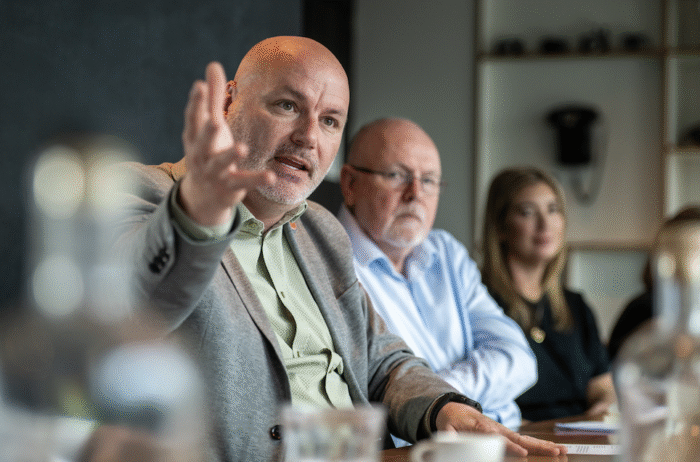
The value of such services was under the spotlight at a recent roundtable event hosted by Corporate Adviser — where the provider YuLife gave a first look at its three-year research project, conducted with the University of Essex.
YuLife says its research demonstrates the tangible impact that gamification and AI are having in the wellbeing space — not just on user engagement, but on measurable improvements to employees’ health, which can lead to reduced claims and potentially lower premiums.
YuLife’s lead data scientist Dr John Ronayne said it is in the interest of insurers, employers — and employees themselves — to tackle this issue, given that an estimated 80 per cent of chronic disease is currently attributed to lifestyle factors. This includes poor diet, lack of exercise, stress, disrupted sleep, smoking or drinking to excess.
Addressing this through the workplace should help reduce absence and improve productivity — an issue that the government is also keen to address through its Keep Britain Working Review, led by Charlie Mayfield.
The insurance industry hasn’t been short of tools and services designed to tackle these issues, with most group risk products embedding a range of ‘added-value’ wellbeing and early intervention services, including EAPs, ‘mindfulness’ apps, advice on nutrition and diet, and discounts on gym memberships, trackers and smartwatches.
But industry data suggests just 2 per cent of members utilise the EAPs and telemedicine services offered on traditional insurance products. Consultants at the event agreed that the promotion and communication of many of these services can be poor, leading to lower levels of engagement.
Standalone wellbeing products are more widely used, with around 20 per cent engagement. But this still means the majority of eligible members are not utilising these services — affecting the impact and the cost-effectiveness for employers.
Gamification gain
However, YuLife says its gamification techniques are making a significant difference, with around 80 per cent engagement among its user base. “Around half of YuLife users are going on to the app every single day,” said Ronayne. “When you get that level of engagement it unlocks the potential of these services to drive behavioural change and deliver real impact.”
So how is YuLife getting such high levels of engagement? Ronayne said it is using behavioural science and gamification techniques to make the app appealing to use, and rewarding repeated interaction. The app uses leaderboards, challenges, and weekly and monthly goals and targets, but critically tailors the various nudges used to individual members.
“If it’s more meaningful to the user, then they are more likely to engage with it,” Ronayne said.
It is this gamification that has been at the core of this university research project. Through randomised trials, the university aims to provide science-based evidence on how these techniques can change behaviour patterns and impact wellbeing.
This approach integrates actuarial and behavioural science, with the project team able to draw on data from the UK Biobank — a large-scale biomedical database and research resource, which contains anonymised genetic, lifestyle and health information from more than half a million UK participants.
Ronayne explained that this enables researchers to infer the real-world health impact from changes to lifestyle. The first stage of this research, the randomised trials, is nearing completion, with two participating companies — one of which is the employee benefits consultancy Broadstone — reaching the 12-month mark. YuLife said results to date show the important role gamification can play when it comes to promoting and sustaining healthier habits.
One key metric is the number of steps taken by participating employees. “We’ve seen a 16 to 17 per cent increase in the number of daily steps by participants when compared to the steps taken in the previous year,” said Ronayne. “What is key though is that this increase is seen across all groups, regardless of age or current level of activity.
“This isn’t just capturing those who are already walking 10,000 steps a day and saying monthly competitions and daily nudges can push this up to 12,000-plus a day. At this level the gains to overall wellbeing are more minimal.
“What is really interesting is that we’re getting those in the higher risk categories to increase their daily activity, including older participants and those who were doing minimal exercise before.”
In fact, YuLife’s research shows that it is where these two groups intersect, that some of the biggest changes in behaviour were seen.
Those in the 50+ age brackets who were previously averaging less than 3,000 steps a day saw a 28.7 per cent increase on their baseline step count a year later.
These improvements aren’t just seen among white-collar professionals in the Broadstone trial, similar improvements have been seen among manual workers with London City Airport or Paris Motors.
Using the UK Biobank data, Ronayne said it is clear to see the impact on health and wellbeing. “When you look at the improvement in activity in this specific group [older, less active workers], there is a 50 to 60 per cent reduction in their risk of mortality over the course of five years, based on these activity levels continuing.”
YuLife chief revenue officer Keith Bale added that it is not just a reduction to mortality risk that is key. Effectively engaging with members to promote healthier behaviours — from increasing activity to better management of mental health issues — also has a marked impact on morbidity. Bale said this is a key reason YuLife has more recently partnered with group income protection insurers, like MetLife.
“We launched six years ago, in partnership with AIG, as an add-on to their group life product, and saw group life as an undervalued product, where we had the option to deliver a better proposition.
“But our eyes were on the healthcare and protection market. That’s where we always wanted to go because you can start to impact morbidity and health more quickly than mortality.”
Bale said this research is now evidencing this, and he hoped this would soon be reflected in the claims experience and ultimately the pricing of insurance products that have gamification-driven wellbeing services at their core.
“The ultimate goal is to establish a validated model for the insurance industry to better assess organisational risk.”
Bale added: “We think tools like ours offer a win, win, win scenario: for the employee in terms of improved health, for the insurer in terms of reduced claims, and for the employer, in terms of both a healthier workforce, with fewer absences, and lower premiums for cover. We are getting closer to that dream.”
Premium reductions?
Although the full study has yet to be completed, reinsurers have expressed interest in its findings.
Gen Re Life regional manager UK and Ireland Jules Constantinou said:“We have relationships with two or three insurers in these markets, including MetLife, so this research is really interesting for us.”
He added that reinsurers are trying to help insurance clients manage risk — and this includes a range of health risks around disability.
“From an underwriting perspective, it’s thinking about how much cover people should get, to looking at how we get those who are out of the workforce due to ill health back into work.”
Constantinou said the reinsurer often receives pitches from firms, claiming their latest product can reduce claims. But he said the YuLife proposition has a number of advantages. “This is a digital service, which means you are able to roll it out to employers across the country. You’re not worried about capacity.”
He also highlights the fact that YuLife has been operating in the UK insurance sector for years. “The system is built around this market, and through this research they now have data which we can input into our insurance models.”
There remain challenges around pooling, he said, and the fact that there are always a certain cohort who do not engage with such wellbeing initiatives.
When it comes to pricing, Constantinou said Gen Re is not currently lowering reinsurance costs, but he raised the prospect of more favourable pricing in future. “We hope this will be in place at least for the January renewals.”
He adds: “I think the hopeful outcome is that if the average price today in the market is 100, the price with an attached service like this, which can demonstrate healthy behaviours among a broad cohort, is 95 or even 90.”
Consultants at the event were optimistic about this. Lockton vice president and consulting team leader Jamie Tuffield said that in a competitive market, this pricing would be attractive to clients, particularly with premiums rising across many group risk and healthcare products.
But Secondsight lead partner and head of corporate health & wellbeing Charlotte Towne raised one potential question. Given the financial pressures in the market, would providers always pass on the potential reinsurance and claims savings to clients in terms of lower premiums?
Constantinou pointed out that it remained a competitive marketplace so he would expect insurers to pass on any savings in order to win business.
Bale added that YuLife was “very selective” about the insurers it partners with globally. “It comes back to that win, win, win scenario. Our insurance partners have to buy into that, otherwise the model doesn’t work. If they are simply using this as a profit-making exercise then that’s not a good partnership with us, as employees and employers aren’t seeing the benefits.”
AI turbo-boost
Gamification can encourage people to engage with wellbeing services, helping change behaviour and establish healthier lives. The university research specifically looked at the role of gamification, rather than incentives, with the control group having access to an app with the ability to earn ‘points’ to be redeemed, but without the full digital engagement.
However, Ronayne said there is potential for AI-led tools to “turbo-charge” this engagement and transform this insurance risk model.
YuLife is currently utilising its own preventative AI engine across its services. This has been trained not only on YuLife’s own database but on the anonymised health and lifestyle data from the UK Biobank, to understand which lifestyle changes are likely to optimise the health and wellbeing of members.
Ronayne said the data collated to date on engagement levels suggests that this will further reduce claims.
“Gamification alone has the potential to reduce claims by between 5 and 9 per cent, with preventative AI added too, this could reduce claims by up to 18 per cent. This not only significantly improves health outcomes for employees but enhances ROI for business using these services while also helping drive down premiums.”
Those using YuLife’s app answer a questionnaire which covers more than 300 detailed questions, across various health and behavioural topics.
Ronayne explained that members obviously don’t have to answer all of these questions at the outset, with the AI helping to select the questions that are most relevant to the individual, based on their personal details, information already given, stated preferences and past engagement.
These AI tools aren’t just deployed when gathering information from members; they also flag up potential health issues, and guide members towards the activities that members are most likely to engage with and which can deliver the greatest health benefits.
Ronayne said this offers a more personalised approach to wellbeing: “This is about utilising big data and AI to deliver real-time risk monitoring to identify health issues, drive behavioural change through targeted interventions and to guide people towards relevant pathways for meaningful care.”
This doesn’t just cover physical conditions, but can also be effective in identifying mental health issues, be it stress, anxiety, sleep disorders or those at risk of burnout, while signposting appropriate help. All of these remain common causes of both absenteeism and presenteeism in the workplace.
Lifestyle focus
Ronayne said there were limitations to the use of AI at present. Currently AI isn’t powering the main interface used by members. Members aren’t ‘talking’ to a generative AI tool, like ChatGPT, which is making recommendations.
Bale said YuLife’s proposition remains firmly focused on lifestyle, and does not recommend actions based on specific medical diagnoses. “We wouldn’t ask, for example, if people were diabetic. We have steered away from most of these questions, in part for regulatory reasons.
“We didn’t want to make this a diagnostic questionnaire. We want to create an engaging experience that people want to interact with. There’s a degree to which if you’re asking people very serious questions about their health, they may not want to give an answer that is fully accurate or truthful.
“Besides, given the comprehensive profile we build of users we can say there’s a probability this person might
have a condition like diabetes, but we would never diagnose them like that, because then we start moving into the territory of being a digital health provider, and there are clearly regulatory and reputational risks around that.”
Consultants at the event were positive about the potential for both gamification and AI to drive better engagement with wellbeing services, to the benefit of all parties — particularly if this results in keen pricing on premiums. Most recognised that the industry is still very much at the start of this journey, and want to see how the data being generated from studies like this one might impact both the healthcare and group risk market.
Bale said that YuLife has been at the forefront of these changes and will continue to innovate. “An approach which utilises AI will maximise the likelihood of positive change, unlocking the power of personalised, preventative healthcare.”