The workplace pensions sector is on the brink of a digital transformation, with dashboards set to transform how savers engage with their retirement savings.
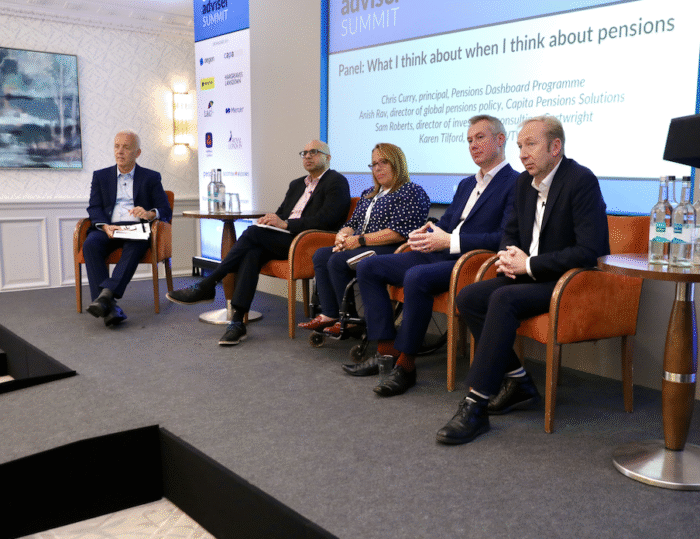
In a wide-ranging panel discussion at the Corporate Adviser Summit, advisers, investment consultants and pension specialists debated how emerging technology — be it AI or cryptocurrencies might also impact the sector.
The panel considered the question of whether digital assets should play a part in DC investment strategies — a topic that sparked debate and interest among the audience.
The two advisers on the panel did not advocate immediate inclusion in defaults — although there was recognition Bitcoin is moving into the mainstream, with regulators in the US and UK taking steps to shape the market, and a UK DB scheme, advised by Cartwright, now investing in this digital currency.
Anish Rav, director of global pensions at Capita Pension Solutions said it was important that investment managers and trustees consider the longer-term investment case, keeping members at the heart of any decision. “Bitcoin might be an exciting investment opportunity, particularly for younger generations, but there is a need for education around this. I think there needs to be a lot of guardrails around schemes investments, so we are not investing in what might be a flavour of the month.”
WTW director Karen Tilford also emphasised the important of education about investments, but pointed out that many scheme members may not understand how their pensions invest in bonds and equities.
“Regulation is changing in the US and they’re encouraging more investment into Bitcoin and cryptocurrencies. As people get more comfortable with this idea then I think there may be a place for these assets in pensions. It is about diversification at the end of the day, but it’s important we look at the longer-term investment potential.”
However neither Rav nor Tilford supported the idea of employers extending this further, potentially by offering ‘bitcoin wallets’ as part of the wider benefits packages as a way to encourage wider savings among their membership. Both pointed out there was a potential reputational risk if an employer facilitated access to a volatile asset that then fell in value “month after month”. However both said they’d be more comfortable with a more limited allocation to this asset through a wider pension scheme, potentially as this was managed through a third party.
Cartwright director of investment consulting Sam Roberts said that it was clear Bitcoin was now entering the mainstream. “A lot is talked about what’s happing in the US, and for good reason as obviously it’s the largest economy and the one that has taken the biggest step change from a regulatory and legislative point of view.”
However Roberts, while supportive of pension scheme investing into Bitcoin, made clear distinctions between Bitcoin as a currency and store of value and other cryptocurrencies — such as Ethereum, Solana and Stablecoins. He likened the first two to investments in single technology companies, while Stablecoin is more directly pegged to a currency such as the US dollar so is more similar to an investment into government currency. “These are just all completely different things.”
He explained: “With Ethereum, Solana and so on you’re investing in a company basically. But a company with low levels of disclosur and huge amounts of concentrated power. There are a small group of people controlling exactly how it operates, and can change how many coins exist, for example. You don’t have any of that with Bitcoin.”
The discussion also look at the potential of the dashboard, which is due to be launched next year.
Those panel agreed that pension dashboards, will fundamentally reshape how people interact with their retirement pots. Rav, pointed out that there was significant appetite among ordinary savers for dashboard.
He said research conducted by Capita three years ago that suggested 65 per cent of people would be willing to use a dashboard and 50 per cent said it would encourage them to invest and engage more with pensions. As he pointed out these figures are “highly encouraging”, particularly as there had been very little publicity or information about dashboard at the point this survey was taken.
Dashboards offer an “enormous opportunity” to engage members of workplace pension schemes, he said, particularly younger members, although he gave an important caveat: it is important to get the infrastructure right.
Tilford agreed that there was an opportunity but said it was important that dashboards are more than just a static data source. “Once people have located the data [on all their pensions] the questions is what they do with this information: are they paying in enough, how can they translate this into a retirement income?” She said it is important that dashboard offers tools, modelling and guidance to support users with these decisions.
Chris Curry, principal of the Pensions Dashboard Programme said described dashboards as being the first stage to bring pensions fully into the digital age. He said international experience suggests take-up will be high, though the challenge will be turning awareness of pensions into meaningful action.
“The fact that people know what they’ve got is a really good starting point,” he said, stressing the importance of integrating the state pension to provide a clear foundation for planning and to potentially reducing the possibility of people disengaging completely if they found their projected pensions were small.
The panel also saw AI as being fundamental to driving engagement and helping people make more informed choices about pension saving. However Curry confirmed that the first iteration of the dashboard, through MoneyHelper, would be unlikely to have its own AI bot.
But he said: “The first version of dashboards will be quite tightly controlled so there will be no transactional capability at this stage and there will be restriction about how information can be removed and preserved, with warnings attached to everything until we understand and learn what it is that people are going to be doing with dashboards.” This was important to keep users safe, he said, highlighting the potential fraud risk which was being taken “very seriously”.
However he said he anticipated that AI will be an integral part of dashboards in future. “Dashboards will continue to evolve and innovate. They won’t stand still and I think that AI and dashboard will become inextricably linked. There’s no doubt about it it will happen.”