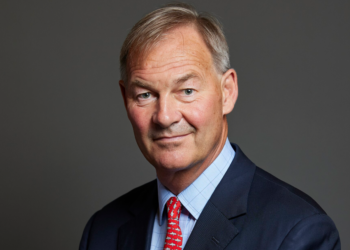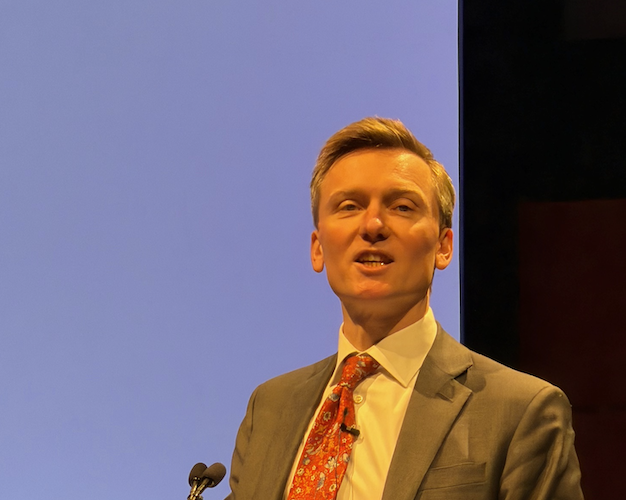
DC pension schemes should not shy away from venture capital as being too risky as its high returns are worth the risk says pensions minister Torsten Bell.
In a wide-ranging speech and Q&A at the Pensions UK investment conference today, Bell pointed to top quartile returns for VC of 30.2 per cent for 2025 from the Ontario Teachers’ Pension Fund, upside that has been largely missed by British pension schemes.
He highlighted the fact that Swedish pension funds have greater investments in UK DC than British ones. Bell said: “We produced 16 new unicorns in 2025, more than anywhere else in Europe, and that year is not a one off.
“And the British Business Bank found last year that the top quartile of UK venture funds outperformed the top quartile of every other private market asset class. The UK VC industry will need to change itself in a world here pension schemes are more heavily involved, not least to be able to accept bigger ticket investments.”
He flagged the role of the British Business Bank as being a conduit to the pensions sector to facilitate these investments.
Bell also defended the government’s changes to salary sacrifice, claiming they were only enjoyed by a niche of generally higher-paid workers, and added that the cost of the relief is set to grow to £8bn by the end of the decade, equal to the cost of the RAF.
“The costs of it [salary sacrifice] will triple to about £8bn by the end of this decade. That £8bn is the same cost as the RAF. Low earners are excluded. I read a lot of dangerous copy saying people won’t have an incentive to save. That is not true. There is £70bn of [pension tax relief] incentives, that are available to everyone.”
On the Pension Schemes Bill mandation clause, he said the government would make it clear it would only be used to support the Mansion House Accord, and rejected the argument that a future government could use it for more extreme interventions, arguing that parliamentary sovereignty meant they could do this anyway.
He said: “There are sunset clauses on these powers. But remember that any government with a majority can do things. The power will only be able to be used for implementing the Accord and nothing else.
He confirmed that retirement-only CDC regulation would “happen this year”.
Questioned about buy-side pressure for change, he said he thought the VFM framework was already changing provider behaviour, and hinted at regulatory action against consultants when he said: “You are right, we do need to keep going on the consultant side,” without giving details as to what sort of intervention this could mean
The main focus of his speech was on using DC pension assets to drive investment in UK infrastructure and businesses.
He said: “Most [DC schemes] already invest in infrastructure. L&G has invested in the Haweswater Aquaduct. Nest is investing in fibre broadband to parts of Scotland rather more remote than this conference centre, and Railpen is very much in the wind farm business. But there is much more to be done and the main barrier is a lack of a pipeline. So this Monday we published an updated infrastructure pipeline flagging projects – the Lower Thames crossing is the largest road project for a generation. The Heathrow expansion will be the largest private finance infrastructure project in Europe, and there’s Gatwick and Luton too. Small module [nuclear] reactors have been given the green light.
“So as DC schemes grow we should expect to see many ore built in-house infrastructure capacity. See for example Royal London’s acquisition of Dalmore Capital.”
He also cited the British Growth Partnership’s collaboration with Aegon, NatWest Cushon and M&G.