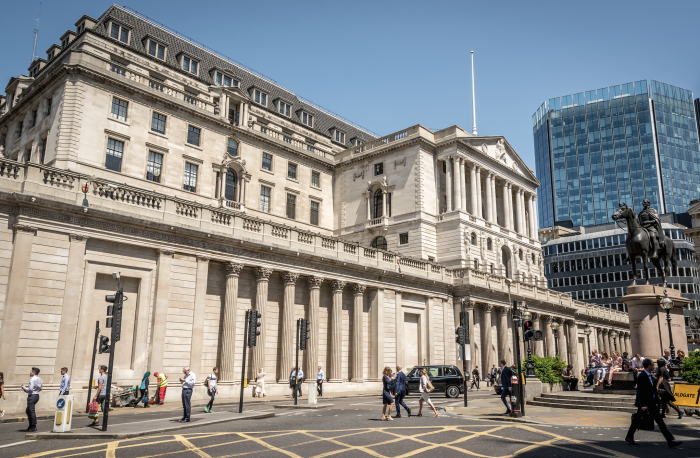
The Bank of England has voted to cut interest rates by 0.25 percentage points to 4 per cent — a move widely anticipated by the market.
The BoE monetary committee voted 5 to 4 in favour of this reduction — although for the first time two rounds of voting were required to reach a majority vote. This highlights the underlying difficult economic conditions, with growth still weak but inflation remaining a persistent problem and failing to fall back to the BoE’s target of 2 per cent.
Cutting interest rates is widely seen as a move to boost growth, but can also fuel inflation.
This latest cut followed a reduction in May, and the BoE’s decision to keep rates on hold in June.
The move has been welcomed by the pensions industry, although many commentators said it is unlikely to have a significant impact on the sector.
XPS Group partner Adam Gillespie said: “We expect the impact on DB and DC pension schemes to be modest. This cut won’t move the needle much for most schemes as it is the movements in long-term UK yields — shaped in part by the Government’s challenging fiscal position — that will have the greatest impact on pension outcomes.
“Trustees and sponsors should remain focused on the bigger picture: robust long-term funding and risk management, and not simply the latest rate change.”
Gillespie added: “Today’s cut is likely to have a negligible impact on UK DB schemes, with schemes remaining well-funded and largely insulated from short-term rate changes by hedging strategies.
“For DC savers, the picture is more nuanced. Lower base rates may reduce returns on cash holdings, but long-term pension growth continues to be driven primarily by investment performance rather than short-term rates. Outcomes for those purchasing annuities continue to depend heavily on long-term yields.”
Talking about the wider economic difficulties, Standard Life managing director for retail direct Dean Butler said: “While not unexpected, today’s cut reinforces the Bank’s cautious response to a challenging economic backdrop.
“Interest rates are now at their lowest level in two and a half years, reflecting growing concerns about economic momentum and a softening labour market. While inflation remains way above the 2 per cent target, the Bank is clearly attempting to support growth without reigniting price pressures – a delicate balancing act.”
Schroders senior economist George Brown adds: “Today’s rate cut is no surprise, but the path forward is anything but clear.
“Jobs, growth and inflation figures all call for different policy prescriptions, as reflected in the unprecedented two rounds of voting needed to reach a majority. Given the uncertainty presented by the conflicting data, the committee is right to stick to its “gradual and careful” mantra.
“Nervousness about the labour market might prompt another cut in November. But this will be difficult to justify unless disinflation is clearly underway. As such, we think there is a decent chance rates will not fall below the current rate of 4 per cent this year.”