
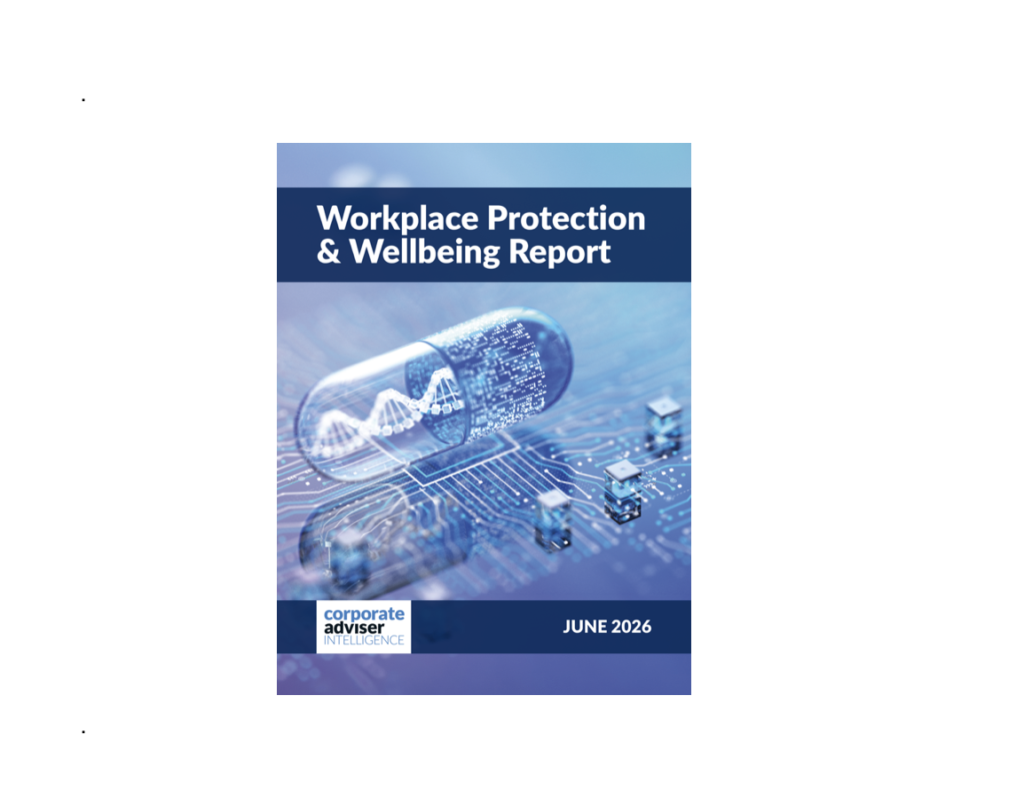

Corporate cash plans and group life policies were the fastest-growing workplace protection products in 2025 as employers continued to prioritise lower-cost health and protection benefits against a backdrop of rising healthcare costs, according to Corporate Adviser’s latest Workplace Protection & Wellbeing Report.
CLICK HERE TO REQUEST A COPY OF THIS YEAR’S REPORT
The report found that corporate cash plans remained the fastest-growing product for the third consecutive year, with employee numbers rising 7.7 per cent to more than 2.09 million. Group life also enjoyed strong growth, with the number of employees covered increasing 7.25 per cent to almost 11.9 million, cementing its position as the UK’s most widely-held workplace protection benefit.
By contrast, growth in higher-cost benefits slowed. In the protection market the number of employees covered by group income protection was broadly flat. However the corporate healthcare market faced more significant headwinds, with steel premium increases continuing. This contributed to a reduction in overall employee coverage across PMI and healthcare trusts – although the number of employees covered by group PMI grew by 8 per cent.
Despite the challenge of rising premiums in the PMI market, advisers continue to view this product as delivering the strongest return on investment for employers, ahead of wellbeing services, cash plans and group risk products.
These figure contained in the report show how affordability is increasingly shaping employers’ decisions when it comes to benefit spend. However, the report also highlights longer term trends across the sector, which show many organisations continue to invest in employee health, in the face of growing issues around absence and low productivity. The report shows how resilient the protection, healthcare and wellbeing sector has been during recent periods of economic pressure.
The report also highlights how providers across all sectors are continuing to expand digital health services, with virtual GPs, mental health support, preventative screening and early intervention services now becoming standard features of workplace benefits. The report gives a comprehensive list of the different wellbeing providers that are used on many healthcare and protection products, as well as giving more detailed information on many of the leading wellbeing providers operating across the workplace sector.
The report also points to the Government’s Keep Britain Working Review as a potential catalyst for further product evolution and wider adoption of these employee benefits in many workplaces. This review is likely to lead to greater emphasis on measuring the effectiveness of workplace health interventions and closer collaboration between employers, insurers and healthcare providers which may influence how protection products develop and are recommended by advisers in future.