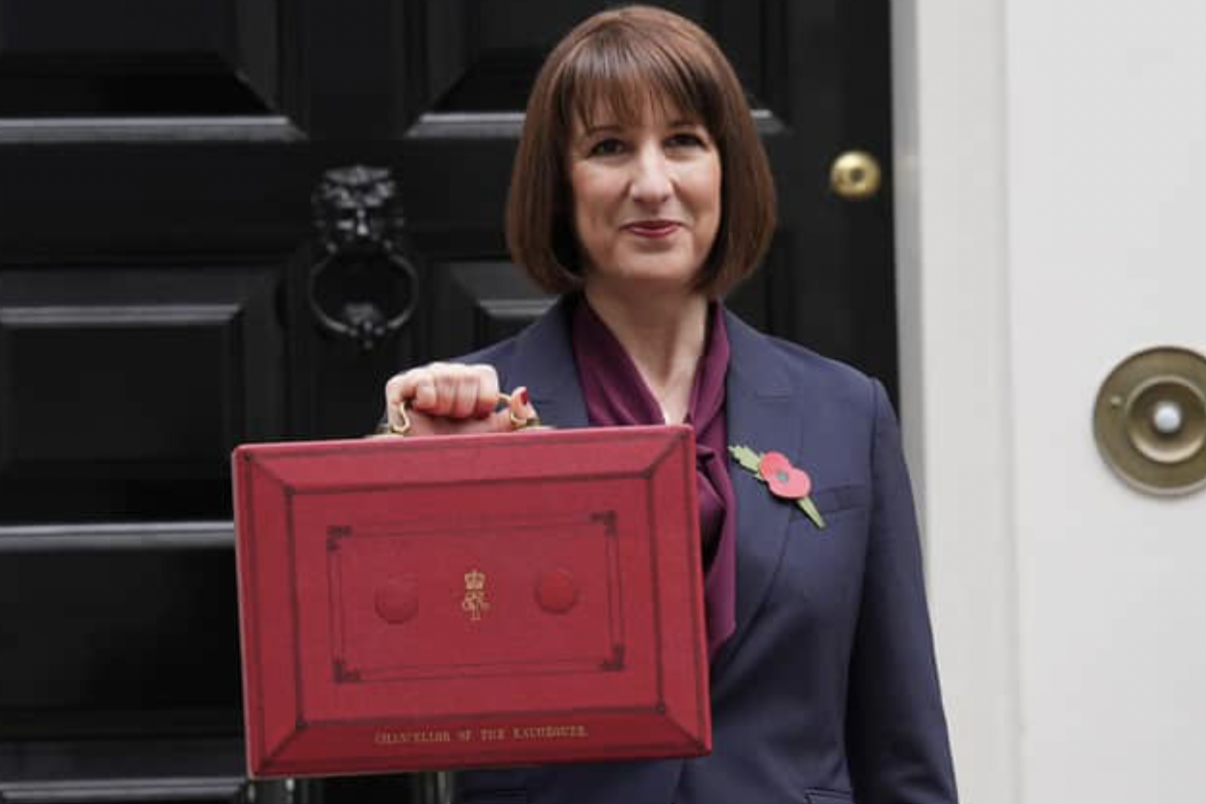
The Chancellor’s unprecedented ‘pre-Budget’ speech this morning paves the way for significant tax rises later month, as she refused to rule out breaking manifesto promises not to raise income tax, national insurance or VAT.
Rachel Reeves said this speech was designed to ‘set out the context’ for the forthcoming Budget, to be held on November 26.
She signal the Government would not be going back to austerity, via widespread public sector spending cuts. Instead she said the focus was on driving growth and the Government’s three key priorities: getting the national debt down, cutting the cost of living and reducing NHS waiting lists.
Reeves also said that government would focus on “fairness” and would aim to put “national interest ahead of party interest”.
It has been clear for some time that the government would need to raise taxes in the Budget, with growth remaining anaemic and a black hole in the nation’s finances. With Labour until now ruling out its largest tax-raising mechanisms, there has been speculation that pensions could be in the Chancellor’s sights, in a bid to raise revenue.
Some pension commentators have said that Reeves’ stress on ‘fairness’ could mean changes to pensions tax reliefs are “probably not just possible”.
DeVere chief executive Nigel Green says: ““The arithmetic is brutal. Debt servicing costs remain elevated, productivity has been downgraded, and growth is stagnant. Something has to give, and that something is tax policy.”
He warns that anyone with exposure to UK assets should now assume that changes to capital gains tax, dividend allowances, inheritance thresholds, and pension reliefs are probable, not possible. “
“Freezes to inheritance thresholds, reductions in higher-rate pension relief, tighter dividend allowances, or alignment of capital gains with income tax can all be described as modernisation. But they amount to the same thing: a heavier burden on savers and investors.”
Prior to Reeves’ speech there had been considerable speculation that Reeves would target pensions in the upcoming budget. Potential options include a change to current salary sacrifice arrangements and reducing the amount to tax-free cash people can take from their pension pots. This has led to a spike in inquiries and withdrawals of tax-free cash from pensions. As in the run up to previous Budgets, there has also been speculation that the Government may reduce higher rate tax relief on pension contributions.
Other recent speculation has suggested that Reeves might raise income tax by 2 percentage points, but lower national insurance by the same margin. This would effectively protect ‘working people’ – with one change largely negating the other – but would raise additional income for those do not pay the same rates of NI, such as pensioners, landlords and the self-employed. Depending on how these are set it could also impact higher-earners.
There was some speculation that if the Reeves is considering a major tax-raising move, like raising income tax, this may make many smaller changes less necessary, which could mean less tinkering with pensions.
Hargreaves Lansdown head of personal financial Sarah Coles, says that given any rise to VAT runs the risk of being inflationary, this puts changes to income tax front and centre.
She adds that this if this does happen this will make financial, particularly around pension more important.
Coles points out that the cost of a rise in basic rate income tax would vary with earnings, but a 1p rise would add £224 to the tax bill of someone earning £35,000 each year. If they earned £55,000, it would cost an extra £377 – and it would be the same for someone earning £75,000.
She says: “A rise that only affected higher and additional rate taxpayers might be easier politically, as by falling only on higher earners the government could make the case that the average earner wouldn’t be affected.
“If you earned £35,000 a year, an extra 1p on higher rate tax wouldn’t cost you anything. The more you earn, the harder this hits, so if you earned £55,000, it would cost you an extra £47 a year and if you earned £75,000, it would cost you an extra £247.”
But she points out that putting a penny on both would mean someone making £35,000 a year would pay £224 more. Meanwhile, if you earned £55,000, it would cost you an extra £424 and if you earned £75,000, it would cost you £624 more.
Quilter tax and financial planning expert Rachael Griffin says: “Reeves’s pre-Budget speech was all about preparing the ground for some painful measures later this month.
“She knows this Budget will define her credibility, and her message today was clear that Britain’s finances are in a worse state than many realise, and everyone will be expected to play their part in putting them back on track.
“Reeves was at pains to distance herself from the politics of austerity, arguing that deep cuts and short-term fixes are what weakened the country’s economic foundations in the first place.“Her insistence that ‘easy answers’ are off the table is a warning that there will be few giveaways in this Budget.”
She adds: “This was a speech designed to project authority and honesty, not to win popularity. The real challenge for Reeves will come when she has to translate that rhetoric into decisions that feel credible to investors but also tolerable for working families.”