

The UK is uniquely placed to spearhead faith-based pensions, not as niche offerings but as part of a broader shift toward value-driven retirement solutions that embed ethical and sustainable principles into the mainstream retirement system.
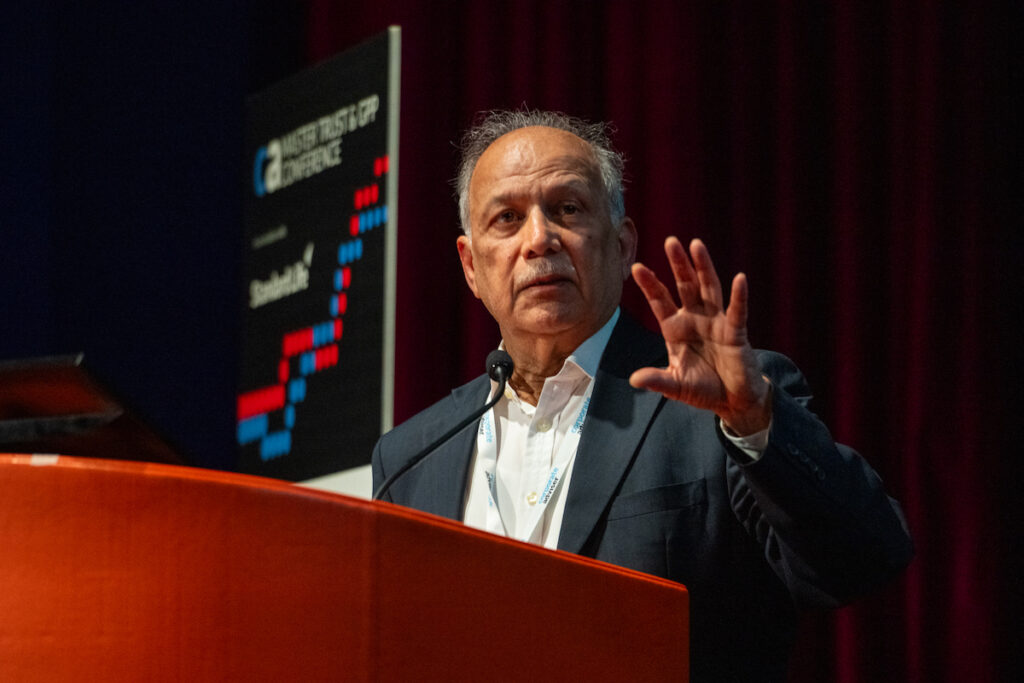
Speaking at the Corporate Adviser Master Trust Conference, Ajmal Bhatty argued that while the need for faith-aligned pensions is clear, the UK industry has yet to establish a coordinated approach that integrates product availability, consumer awareness and ethical investment principles.
He said: “We are living longer, but not necessarily living better,” stressing that the system “was never designed for the scale of post-retirement risk now falling on individuals.”
Bhatty outlined the principles underpinning faith-aligned pensions, which he described as a commitment to “ethical stewardship.” These include avoiding debt and interest-driven finance, given the fragility such systems create for savers and economies.
He said “interest‑driven systems create all kinds of problems.” He also stressed the importance of negative screening of harmful industries, excluding sectors such as gambling, tobacco, armaments, or exploitative labor, while positive screening prioritises real-asset investment and productive economic activity.
He emphasised: “This is about prioritising long term purposeful growth. The profits are aligned with sustainability and responsibility. That avoids the trap or tries to avoid the trap of greed that leads to false economy.”
Bhatty also noted the limited awareness and availability of faith-based pensions in the UK, noting that “nearly 70 per cent of Muslims we surveyed were unaware of Sharia-compliant options,” leaving many savers in default funds that may not align with their values.
He highlighted structural gaps in the market, noting that only a handful of master trusts currently offer Sharia-compliant funds and none provide fully Sharia-aligned post-retirement solutions.
He noted that the UK currently has no lifelong Sharia-compliant pension providers and suggested that integrating ethical screening into reforms like mega-funds and master trusts could establish inclusion as a core principle.
Bhatty stressed that faith-based pensions are not just about religious accommodation. He noted: “These are really accommodations for ethical stewardship. These are about the responsibility which is about managing resources wisely, accountability which is acting transparently, purpose which is about sustainably serving the community… and about integrity, which is about upholding fairness and rejecting the misuse of funds. And this is how we build resilient pensions.”
He described the UK as uniquely positioned to lead in faith-based pensions. He said the halal economy alone is growing rapidly with the UK already the largest globally. He highlighted that Islamic pensions currently make up around 1 per cent of the market but could grow substantially, driven by ageing Muslim populations and rising demand for values-based financial solutions. It is currently around £170 billion and could grow to £688 billion by 2034.
Bhatty added: “If we design pensions that are values‑based, rooted in fairness and honest investment, we have the opportunity to build resilient, inclusive solutions, not just for some, but for all.”