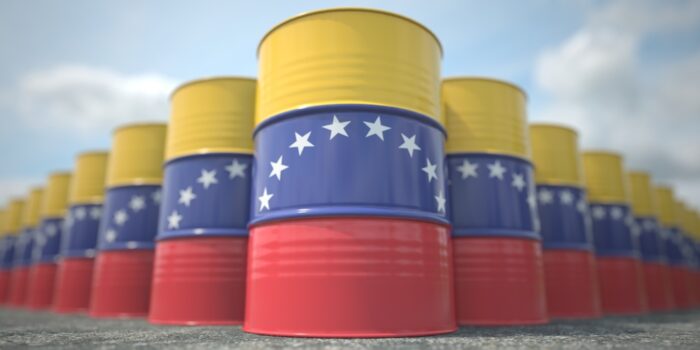
To date there has been a muted market response to US military action in Venezuela — which has seen its president Nicolas Maduro and his wife facing legal charges in New York today.
In early trading in the US, share prices rose with gains for large oil stocks. Overall the blue-chip heavy Dow Jones index, the S&P 500 and the tech-rich Nasdaq index all were in positive territory in the first few hours of trading. Experts said that many were downplaying the long-term economic fallout from President Trump’s action in Venezuela, with stocks also buoyed by upbeat news on AI from tech giant Nvidia.
Meanwhile at the start of first full week of trading since the Christmas break, the FTSE100 was also marginally up — although still trading below the 10,000 mark that it briefly breached over the festive period. This upward momentum was driven by gains in defence firms such as Babcock, BAE Systems and Rolls-Royce.
AJ Bello investment director Russ Mould says: “Defence stocks often move higher when there are heightened tensions between two countries as investors believe events could spur governments to spend more on military protection. It was only natural to see the sector in demand after Venezuela’s leader was captured.”
The precious metals miner Fresnillo also sparkled as gold and silver prices were boosted by a flight to safety amid this geopolitical tensions.
IG chief market analyst Chris Beauchamp adds: ”Markets have so far shrugged their shoulders at the weekend’s Venezuela news, though questions linger over the longer-term geopolitical precedent it may set.
“Oil prices weakened initially, but losses have since been pared back given that any increase in production remains months away at the earliest.
“Equity markets continue to focus more squarely on this week’s payrolls report and the imminent start of earnings season, though investors can be forgiven for wondering whether the US move increases the risk of geopolitical instability around Taiwan.
“Of potentially greater relevance is whether Washington continues to press its claims over Greenland, and how this may further strain cohesion within the Western alliance.”
Stephen Dover, head of Franklin Templeton Institute adds: “The situation is therefore uncertain and will likely remain fluid. Nevertheless, some initial implications for markets and investors are worth highlighting.
“The US military action is not unprecedented, nor is it likely to reflect a fundamental shift in US foreign policy. Alone, it cannot unlock Venezuela’s massive crude oil reserves. For that, durable political stability is necessary.
“Accordingly, the initial reaction to the military action across equity, fixed income and commodity markets is apt to be small. But the use of force will reinforce the view in many countries of the need to boost spending on national security.
“Finally, and over the longer run, a more stable, productive, and prosperous Venezuela will have the potential to offer the world significant supplies of oil. That would be significant for global growth, but it will take political stability and considerable investment to unlock that potential.”