Premiums are soaring across the healthcare sector, thanks to rampant medical inflation and increased claims.
TO DOWNLOAD A PDF OF THE ROUND TABLE SUPPLEMENT CLICK HERE
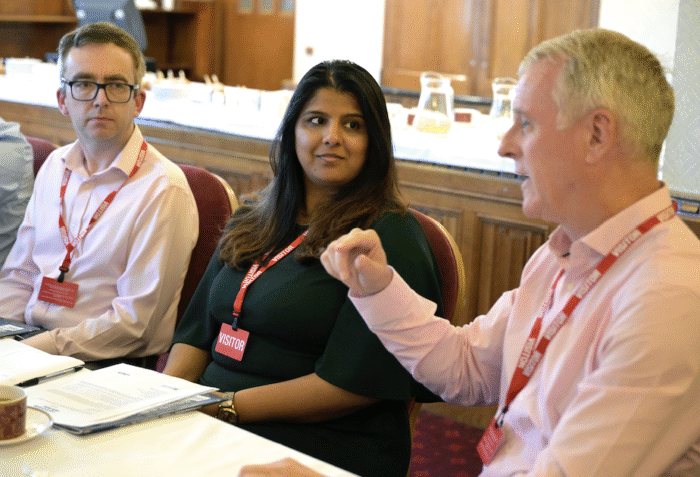
At a recent roundtable event, to discuss the findings of Corporate Adviser’s latest Workplace Protection and Wellbeing report, advisers and providers discussed the impact this was having across the broader market, and ways to minimise increases and contain claims costs.
The report shows that group risk, group PMI and the corporate cash plan market continued to expand in 2024 — albeit at far slower rates. Those at the event agreed this slowdown was a result of rising costs, with many concerned that the trend could accelerate, particularly given the squeeze on employers’ budgets, with the rise in NI costs.
The effect has been most pronounced in the corporate healthcare market, where the number of employees covered by group PMI policies or corporate healthcare trusts grew by just 1.44 per cent last year amid some eye-watering price rises, which have seen costs triple for some employers.
Premium pain
“We have seen some massive increases, and the reality is there’s only so much budget to go around,” said Broadstone’s principal consultant Robin Watkins. Martin Moore, senior employee services consultant at Beckett Investment Management Group agreed, describing some premium increases he’d seen as “ridiculous”.
Omny strategic partnerships consultant Roy McLoughlin highlighted the potential conundrum the sector finds itself in, five years on from the pandemic. “During my working life I’ve never known a time
when employers and employees were so engaged with benefits. But then we’re having to have some really awkward conversations about cost.”
Return of the FD
Increasingly these ‘awkward conversations’ are with financial directors juggling diminishing budgets. Brown and Brown head of group risk Terry Froment said, “For the last few years I’ve mainly been speaking to HR people, and the financial director hasn’t really been getting involved. But this has changed more recently and they are rejoining these conversations.”
So how are advisers helping employers to square this circle — delivering the health benefits their workforce needs while keeping a lid on spiralling costs?
Moore said: “If cost is a major consideration, we’re looking at changing the benefits to only cover priorities. This can be with a view to reducing claims going forward, keeping costs under control. This is about strategic choices, perhaps focusing on early intervention services, so that claims can be caught early. This is probably the best way in the long term to reduce costs.”
Reviewing terms and eligibility
Any benefit review may reconsider policy terms. Froment said there has been a major shift with group income protection policies, with far more now written on limited terms, rather than paying out to retirement. “I can’t remember the last time I had a new business opportunity that didn’t start with a five-year term, and in some cases work back from there. This is helping to ensure that group protection is a more affordable benefit.”
Succession Employee Benefit senior employee benefit consultant Simon O’Reilly said that these cost challenges mean some employers are looking to restrict which employees have access to certain benefits — particularly when it comes to more expensive healthcare cover.
“We are having those conversations around eligibility criteria, in some cases pinching it a little bit in terms of the membership and who is entitled to group PMI going forward.”
This isn’t the only way to help control spiralling healthcare costs though. O’Reilly said employers are also increasing excesses, and may offer a cash plan to cover this payment. “This can work well. We are also looking at underwriting definitions as well, particularly when it is a fully medically underwritten scheme.”
Salary sacrifice options
Consultants said more employers are also looking at salary sacrifice options, to help mitigate benefit costs. “Some employers may have been a bit resistant to this, but are now looking far more seriously at it with the increase in national insurance costs,” said O’Reilly. He said there is a need for advisers to educate employers, particularly SMEs, on the potential this offers, with NI savings potentially used to subsidise increases in benefits costs.
However McLoughlin points out that this is a one-off opportunity. The savings made may fund next year’s premium rises, but if these continue upwards then there won’t be the opportunity to do the same cost-cutting exercise again. He advocated for more fundamental changes across the industry to put claims costs, premium increases and benefit spend on a more sustainable footing.
PwC director of DC pensions and benefits lead Roshni Patel agreed, saying there was a real need for innovation across the industry, not only in terms of product and proposition, but processes too.
While the group risk and healthcare sector turned to digital healthcare options, such as virtual GPs, in the wake of Covid, providers have failed to modernise their own systems.
“The fact that we are still getting people to fill in underwriting forms manually with a pen is pathetic,” she said. “Tele-underwriting or some sort of AI underwriting needs to be brought into the mix.”
A technological revolution wouldn’t just make processes more efficient, it could transform the way that members use various different products and add-on services — potentially further reducing claims costs.
Patel said that triage is an important part of this, helping direct members to the most appropriate service when they first experience symptoms. As a consultant she said she works with employers to ensure that ancillary or added-value services are promoted effectively to employees, particularly when there is a degree of duplication across different product lines.
“The question is why are we not using AI and technology to develop this further? Ensuring people get the right help, more quickly to potentially spot problems earlier and prevent them from turning into more complex and more expensive claims.”
Smarter care pathways
Simplyhealth product director Tina Kennedy said the cash plan provider has embodied this approach with recent proposition developments. Rather than just offer a range of add-on services — be it an EAP, virtual GP, online physiotherapy or mental health support — Simplyhealth is creating treatment pathways to direct people to the most appropriate help.
“A virtual GP is pretty useless if members have an appointment but then don’t know what to do next. We’re looking to build pathways that can help members with specific conditions, or target specific demographics. This might be an MSK or women’s health pathway, or a pathway looking at the health challenges faced by an ageing workforce.
“This is where the innovation needs to happen across the industry. It’s not just about services offered from different third-parties and partners, it’s how you join them up into recommendations and ‘next actions’ for members.”
Kennedy said this approach helps members and can also contain costs by using a national network of providers to ensure more competitive rates. Effective pathways can reduce the ‘steps’ in a treatment chain. “Because we are used to the NHS we see a GP appointment as a first port of call. But an effective MSK pathway could triage members directly to physiotherapy.” This ensures prompt treatment and also reduces the cost of a virtual GP appointment which is likely to recommend physio anyway.
Added-value services
Consultants debated the duplication of these added-value services, with employees likely to have access to more than one virtual GP if covered through group life, cash plan and a PMI policy. As Froment points out, in some cases they may be through the same external provider.
Is there scope for insurers to turn off some of these services, to reduce duplication, simplify benefits administration and ultimately reduce cost? While consultants were in favour of this, most did not expect a modular approach to become widespread soon. Froment asked whether providers could work in tandem when using the same third party providers for ancillary services.
Unum key account director Garreth Todd said while more collaboration may happen in future, he did not expect imminent change. But he said there were examples where providers serving larger employers talked to each other and advisers to “essentially ensure the employee has the best of breed for the various different services being offered, and that other providers are aware of the complementary services that are available.”
Advisers said that smart use of these various services can also impact claims costs. For example, not using a virtual GP on a PMI policy, which may trigger a more expensive claim, but instead using the service offered through a group risk policy. Advisers say this requires education and effective promotion of these services, with both the employer and employee.
Workplace culture
Todd said that cost containment measures go beyond product and proposition. “Experience tells us that organisations that are better at implementing wellbeing programmes, and have a company culture that is supported from the top down, do not see the same impact on costs and claims pressure.”
Unum said its Help@hand app can be used to support wider wellbeing initiatives across corporates, with support from advisers. This goes beyond services and pathways available: but also needs a focus on how these services are used to deliver impact and a return on investment.
“Recent research by Unum has certainly highlighted a perception gap in many organisations when it comes to employee wellbeing. Around 75 per cent of employers surveyed said their staff were thriving. But when you ask employees in the same firm the same question, the response is often significantly less.
“We don’t want to be in a position where employers are spending more on benefits, but ultimately these are having less of an impact. This feeds into the importance of effective communication and education about benefits and the specific services offered.”
Consultants at the event agreed that engagement was key. Without this, these benefits would not deliver what they were supposed to do: improving the health of a workforce, and so reducing absenteeism and presenteeism costs for employers — while providing an insurance safety net should the worst happen.
McLoughlin said: “ROI can be difficult to evidence at times, particularly in the group risk sector. Employers can look at claims, and can say ‘Why am I paying these premiums when there haven’t been any claims?’ But I would argue that this shows the effectiveness of early intervention and wellbeing services. I’d like to see the industry be far better at promoting this and shouting about how we are helping build healthier, happier workforces.”