We know that the UK has retirement income challenges but so does the United States – maybe more so – and they are looking for ideas.
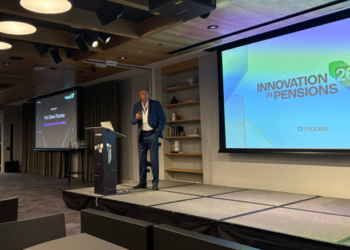
Together we spoke, in April, at conferences at Senator Tom Harkin’s Institute for Public Policy in Des Moines Iowa and in Washington DC at a Financial Times/Prudential US event. Against the backdrop of World Bank meetings in Washington DC, both attempted to tackle the long-standing problem of Americans worrying about living too long rather than dying too soon.
Speakers at The Harkin Institute stressed the need for searching for lessons from abroad and specifically the UK, Australia, New Zealand, South Africa and Ireland. The UK contribution was on proposition development, advice and the role of trustees in ‘shepherding’ good consumer outcomes. Australia’s experiences with its retirement income covenant, contribution levels and longevity risk mitigation for women were highlighted. New Zealand, without a traditional annuity market, has longevity risks that disproportionately affect women who do not have access to DB schemes. In some cases, they are relying on rental income to generate a type of ‘synthetic annuity’.
The United States by contrast is grappling with the Department of Labor’s agency, The Employee Benefits Security Administration (EBSA) – and changing regulatory policies. The move away from environmental, social and governance (ESG) and sustainability investment trends, by allowing 401(k) members greater access to alternative assets through safe harbouring, is on track. These are major changes and will shape retirement income solutions for the long term.
With the Hay Adams Hotel in Washington DC providing a view of the White House, many leading US retirement income stakeholders gathered, at the Financial Times Prudential US seminar, to understand and interpret major trends. Hosted by US economic editor Claire Jones, speakers identified US and international experiences of how ageing is impacting retirement income for workers around the world. Current economic and global turbulence were not central to discussions. Instead, the event highlighted access to advice, proposition development, evolving DC solutions like CDC and how to encourage greater contributions from younger workers in DC plans. US speakers were interested in using AI retirement income tools to enhance coverage and assist with good consumer outcomes.
The UK’s commentary focused on innovation driving DB transition, DC product innovation and how consumers are shaping their own retirement through longer working periods and more flexible retirement actions such as downsizing housing. Many in the audience noted that the US needs to work on contribution levels, flexible investment outcomes and advice to achieve better rates of return.
There was consensus that all first-pillar, government sponsored pension programmes or social security, must address the concerns of retirees today as well as tomorrow. The experiences of Nordic countries were highlighted through dashboard development and individual consolidation and pension payment expectations. Reference was also made to CDC in the Netherlands and the demise of traditional DB provision.
A common theme was access and the need for sufficient funds in retirement by way of lifetime annuities. Speakers made the point that countries couldn’t simply develop accumulation buckets. Irish developments, particularly in-scheme drawdown (ISD), were raised and the notion of good governance was framed against a backdrop of ageing societies and the need to retain skilled workers.
In summary, both US events demonstrated a real enthusiasm for understanding global experiences for meeting consumer needs, individual choice and related flexibility. Longevity risk, especially for women, was emphasised along with the continued decline globally of defined benefit schemes and the associated challenges of management of scheme run off. The backdrop to both events was the Trump administration’s energy in making significant regulatory changes to galvanise plan members to maximise their retirement savings. The ‘elephant in the room’ was the economic impact of the wars in Ukraine and the Middle East and how this may shape retirement income thinking for plan sponsors and fiduciaries. Many OECD countries are having to encourage workers to save for their retirement more effectively and draw funds in retirement in a way that seeks to address the concerns around longevity risk.
The baby boomer generation is fully embracing retirement, and Generation X will begin the process shortly. Living longer is a good thing and so is having enough income to enjoy it.