
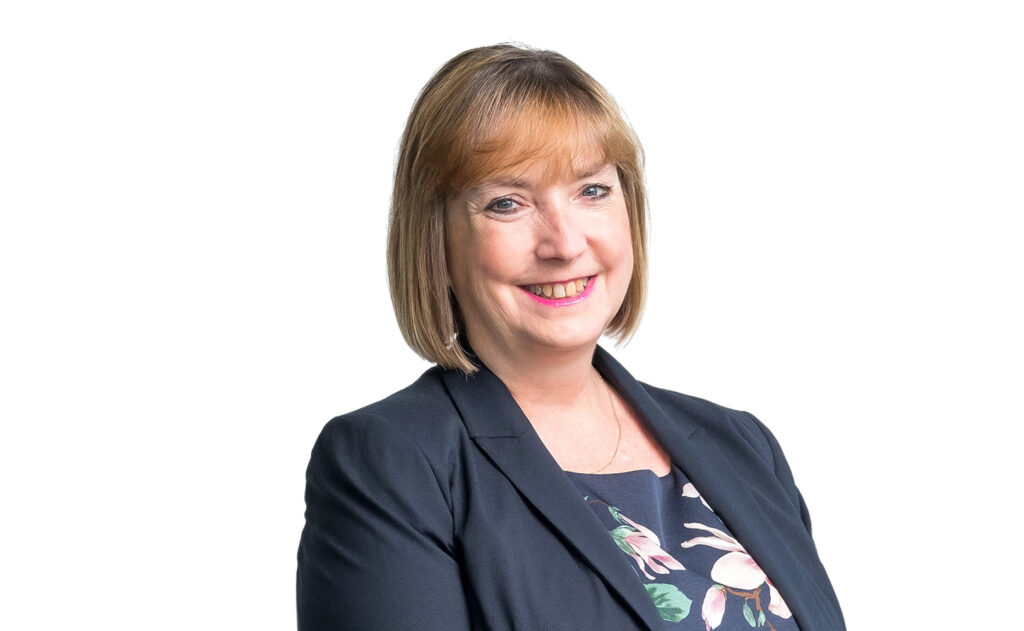

After nearly 40 years in the pensions industry, Rona Train is retiring from her role as a partner and head of DC trustee consulting at Hymans Robertson.
During this period she says she has seen major changes across the industry, much of which has been for the better. But she says there is still progress to be made, particularly when it comes to communicating effectively with members and understanding the difficulties many people face when it comes to engaging with their retirement savings. This problem, she says, has been thrown into sharp relief by her first-hand experience of dealing with different pension providers, administrators and financial companies as part of her own retirement planning.
Looking back at her time in the industry, Train says that one of the biggest changes of the past few decades has been technology, which has spearheaded an information revolution. She started her career in 1986 as an investment analyst at Norwich Union. “The office and the industry were unrecognisable from today. It was fax machines and phone calls, not digital communications.”
“It took longer to get the key bits of information compared with today’s data-rich environment.” But while pensions managers, trustees and administrators have access to vast data sets of information, this hasn’t always translated into a better experience for members.
“When it comes to communications we still don’t talk in a language that most people understand. Jargon still dominates far too much of our communication. It is getting better — but it is by no means universal across the industry. I recently heard from someone who received a 70-page booklet setting out retirement options. People are simply not going to engage with this, and if they don’t understand their options then we have failed.”
This situation hasn’t been helped by the government’s constant tinkering with pension and tax policy, which has inevitably led to increased complexity, particularly around retirement choices with the advent of Pension Freedom rules.
“People need stability and clarity to be able to plan, but we have not always had that.”
She points out that her own experience demonstrates this. “I appreciate I am in a privileged position with a good pension. But I stopped making contributions because of potential concerns around the Lifetime Allowance, which was then abolished, so then I started contributing again.
“Now there’s the question of whether there will be changes to the amount people can take as tax-free cash. It might not change — but it certainly seems unlikely it will increase in the near future, so people are left wondering whether they should just take this money now. It makes it very difficult to plan.
“And there has been research that shows many DC savers have these concerns, regardless of how much they might have saved. There’s not a lot of trust in the system, so we see people taking their tax-free money out, even if they are just keeping it in the bank, which may not be the best long-term outcome.”
Train says one of the key things the industry often overlooks is the emotional element of financial decision-making, which certainly comes to the fore at retirement.
Even with her experience and knowledge of pensions she admits the process was stressful and confusing. Pension scheme rules were by no means uniform and often seemed unnecessarily complex. Key documents later went missing in the post, and she found herself questioning decisions despite decades of professional insight.
“If I found it stressful, how much harder must it be for the average saver? Everyone approaching retirement should be treated as vulnerable. It’s not just a financial transaction – it’s an emotional one, too.”
She said she’d also like trustees and providers to seek feedback from members on their own experience of retiring and learn from these insights to improve processes and systems. “I’ve given feedback to the pension schemes I am a member of — but again I’m in a more privileged position, due to my work, to be able to do this. It should be the schemes actively seeking this information.”
As she puts it: “We have to remember pensions are not abstract numbers and retirement is about real people’s lives. If we lose sight of that, we’ve lost the point.”
Employers, she argues, also have a role to play in improving outcomes. She would like to see more companies fund financial advice sessions for employees at key life stages – whether that’s buying a house, going through a divorce, or preparing for retirement. “We underestimate how much difference a couple of hours of good advice can make at the right time. It can change the trajectory of someone’s financial future.”
Train’s career is, in many ways, a mirror of the industry’s journey over four decades: from the dominance of defined benefit schemes to the challenges of DC, from paper-based administration to digital dashboards, from a male-dominated environment to one where diversity is beginning to take root.
As she points out, when she joined Hymans Robertson in 2004 there was just one female equity partner in the consultancy. Today that number is approaching nine, with many women holding senior roles including Shireen Anisuddin who is a managing partner; Catherine McFadyen, head of pensions; Kathryn Fleming who is head of DC consulting; and Susan McIlvogue, who is head of large DB scheme solutions.
This representation is important, she says. “Back then there were too few female role models. And those we did have almost always felt that they had to act like men.
Today I think women are more recognised for their own individual skills and don’t feel obliged to act in a certain way. I think that has been a really positive development over time.
“It’s not just about gender – it’s about encouraging a range of voices, experiences and perspectives.”
This is one of the main benefits of diversity in the workplace, she says: it empowers people to be their authentic selves.
“This is something I’ve always tried to do in my career. I’ll speak my mind and have tried to make the most of my skills to benefit the employers I’ve worked for and the clients I’ve worked with.”
Having begun her career on the investment side, she found herself increasingly drawn to consulting, and says her career really flourished when she started working in DC consulting, where she says she was able to make the most of her skillset.
“The growth of DC and auto-enrolment changed the game. Helping employers and trustees navigate that shift was incredibly rewarding. It was also about talking to clients, helping them understand complex issues and ultimately benefiting members.”
Change has been a constant theme of recent years in the industry — and will continue to be so for the next 10 years at least, she says. “Master trusts and consolidation are going to reshape the pensions landscape again. The industry has to stay agile.”
Train won’t be at the forefront of these changes, but she says she might not be stepping back from the industry completely. For now her priorities are travel — with trips planned to both Alaska and Vietnam in the near future.
But she says she may look at more project roles in future, particularly in areas where she feels she can add value, and can fit those around her new lifestyle and future travel. “I want to keep contributing, though perhaps not in a full-time role. But it would be great if I can use my experience to help improve the retirement journeys of others.”